El negocio de esperar: cómo se gana dinero almacenando petróleo
La paradoja del petróleo
El mercado del petróleo presenta actualmente señales que, a primera vista, parecen contradictorias. A pesar de las interrupciones de suministro causadas por la guerra con Irán, JPMorgan calcula que en octubre se produjeron 1,4 millones de barriles diarios más de los que se consumieron.
Este exceso de oferta ya empieza a notarse en el mercado físico del Brent, donde el petróleo para entrega inmediata ha pasado a cotizar por debajo del que se entregará unas semanas después. Sin embargo, si miramos los futuros a partir de enero de 2027, ocurre justo lo contrario: los contratos con vencimientos más próximos siguen siendo más caros que los de fechas posteriores.
A primera vista, parece que el mercado se contradice. Por un lado, hay más petróleo del que se necesita y, por otro, los precios siguen reflejando cierta escasez. Pero ambas situaciones pueden darse al mismo tiempo. Para entender por qué, hay que fijarse en algo que muchas veces pasa desapercibido: en el mercado del petróleo no solo importa el precio al que se negocia, sino también la fecha en la que se entrega.
Un petróleo, muchos precios
El petróleo no tiene un único precio. En el mercado, la fecha de entrega también cuenta: comprar un barril para recibirlo hoy no cuesta necesariamente lo mismo que hacerlo para dentro de tres o seis meses. Esa diferencia entre los precios de los distintos vencimientos es la que da forma a la curva de futuros.
Cuando los contratos más lejanos cotizan por encima de los próximos, el mercado está en contango. Esta estructura suele asociarse a una oferta abundante a corto plazo, donde almacenar el crudo implica asumir costes de financiación y almacenamiento. La situación se invierte en backwardation: los compradores pagan una prima por los contratos más cercanos, generalmente porque existe una mayor necesidad de disponer de petróleo de forma inmediata. Es una señal habitual de tensión en el suministro físico.
La curva, no obstante, no debe interpretarse como una predicción directa de hacia dónde se moverá el precio del barril. Su pendiente también depende de las existencias disponibles, los tipos de interés y los costes de almacenamiento, además del valor que tiene para los compradores contar con el crudo en ese momento. De hecho, el mercado puede entrar en contango simplemente porque aumente el coste de mantener petróleo almacenado, sin que necesariamente hayan cambiado las expectativas sobre su precio futuro.
El negocio de almacenar petróleo
Las diferencias entre los precios de los distintos vencimientos también pueden abrir oportunidades de arbitraje. Una de las estrategias más utilizadas en el mercado de materias primas es el cash-and-carry: comprar petróleo en el mercado físico y cerrar al mismo tiempo su venta a plazo, aprovechando la diferencia de precios.
El funcionamiento es relativamente sencillo. Un trader compra un barril de petróleo hoy y pacta venderlo dentro de seis meses a un precio superior. Hasta entonces, debe mantenerlo almacenado y asumir los gastos que conlleva la operación. Si el precio de venta acordado permite cubrir el coste de adquisición, la financiación, el almacenamiento y el transporte, queda un margen potencial de beneficio.
La clave está en que el trader no necesita acertar hacia dónde se moverá el precio del crudo. Al fijar desde el principio tanto la compra como la venta, busca aprovechar una diferencia de precios que ya existe en el mercado, en lugar de apostar por una subida futura.
Eso no significa que cualquier situación de contango permita ganar dinero. Los costes pueden absorber buena parte del margen y no todos los operadores tienen acceso a instalaciones de almacenamiento en las mismas condiciones. También importa que el petróleo comprado pueda entregarse bajo las especificaciones del contrato vendido, ya que cualquier diferencia de calidad o localización puede introducir riesgos adicionales.
Cuando los petroleros se convierten en almacenes
La pandemia de 2020 dejó uno de los ejemplos más extremos de cómo estas diferencias de precios pueden trasladarse al mercado físico. Con buena parte de la actividad económica paralizada, el consumo de petróleo se hundió y los inventarios comenzaron a acumularse. El problema dejó de ser únicamente encontrar compradores: también había que encontrar dónde guardar el crudo.
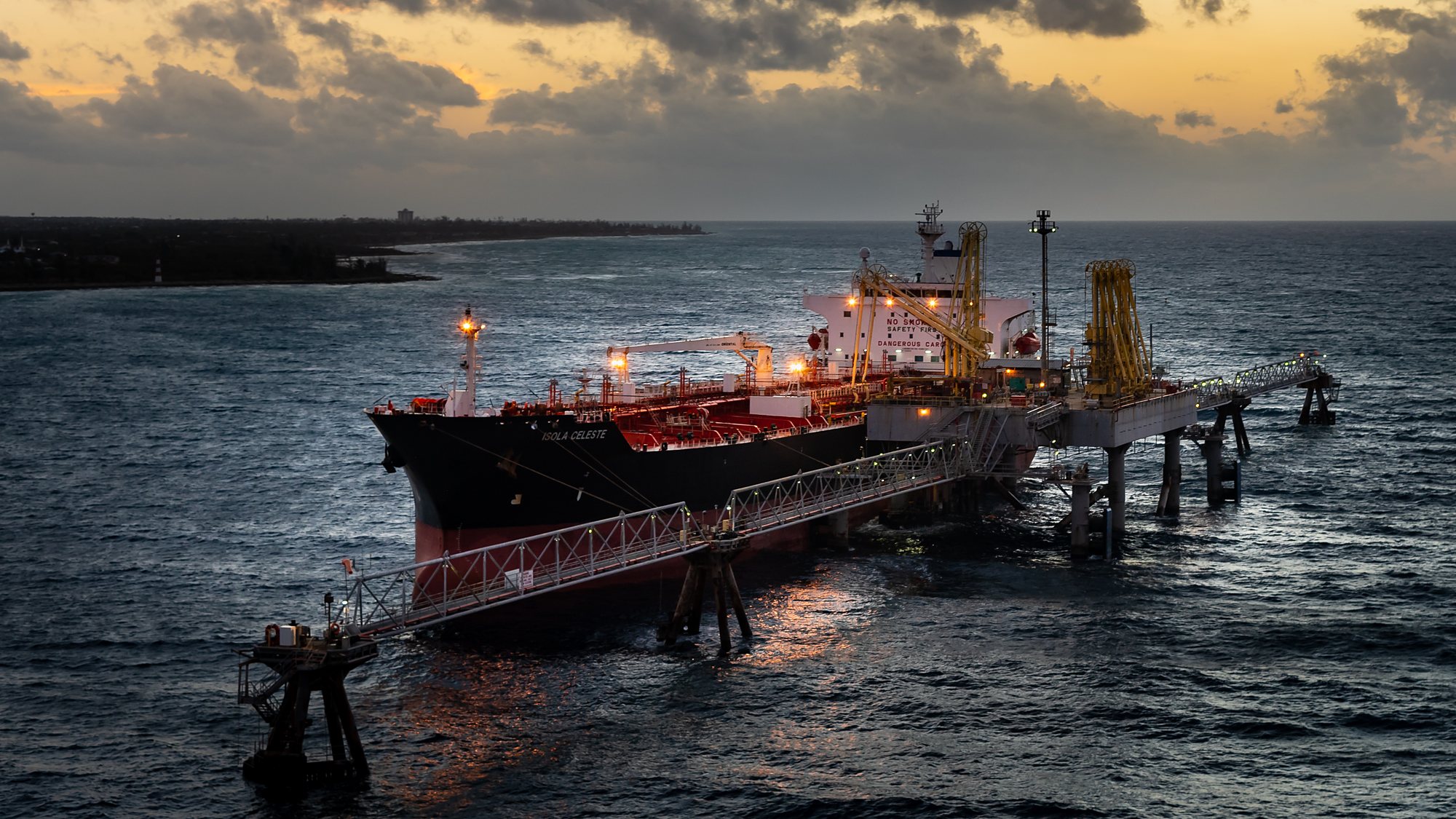
Fue entonces cuando algunos operadores recurrieron a una solución poco habitual: alquilar grandes petroleros para almacenar petróleo en el mar. El fuerte contango que registraba el mercado permitía comprar crudo a precios muy bajos y fijar su venta para meses después a un precio superior. La operación tenía sentido siempre que ese margen cubriera el coste de mantener los buques alquilados, además de la financiación y el resto de gastos.
La magnitud de esta práctica fue considerable. En abril de 2020, Reuters estimaba que alrededor de 160 millones de barriles de petróleo estaban almacenados en barcos, una cifra que refleja hasta qué punto se había saturado la capacidad de almacenamiento en tierra.
Durante aquellos meses, petroleros que normalmente se dedicaban a transportar crudo entre puertos pasaron a funcionar como almacenes flotantes. Todo ello impulsado, en parte, por una curva de futuros cuya diferencia entre vencimientos hacía económicamente viable mantener el petróleo sin vender durante meses.
¿Está volviendo el contango?
El mercado del petróleo empieza a mostrar algunas similitudes con lo ocurrido en 2020, aunque la situación sigue siendo muy distinta. La recuperación de las exportaciones de Oriente Medio, junto con el aumento de la producción en otras regiones y una demanda que no termina de repuntar, está dejando más crudo disponible del que el mercado necesita.
Las primeras señales ya se observan en el Brent. Los precios de entrega más inmediata han comenzado a reflejar cierto contango, mientras que los futuros de los próximos meses mantienen una estructura de backwardation. Esta diferencia importa: aunque empieza a sobrar petróleo en el mercado físico, los precios a plazo todavía no ofrecen suficiente incentivo para comprarlo, almacenarlo y venderlo más adelante.
A esto se añade otro obstáculo. Los costes del transporte marítimo siguen siendo elevados, lo que encarece las operaciones de cash-and-carry y reduce aún más sus posibles márgenes.
De momento, el exceso de oferta no se está traduciendo en las mismas oportunidades de almacenamiento que aparecieron durante la pandemia. Para que eso cambie, el contango tendría que extenderse a vencimientos más lejanos y ofrecer una diferencia de precios suficiente para cubrir los costes de mantener el crudo. La evolución de la oferta y la demanda en los próximos meses determinará si se llega a ese escenario.
Lo que nos dice el mercado
La evolución del petróleo en los últimos meses deja una idea clara: el precio del barril, por sí solo, no cuenta toda la historia. La diferencia entre los distintos vencimientos permite ver si existe abundancia de crudo a corto plazo, cuánto cuesta almacenarlo y qué incentivos tienen los operadores para comprar o vender.
El cash-and-carry refleja bien cómo estas diferencias pueden aprovecharse para obtener un beneficio. Pero no basta con que el petróleo cotice más caro a futuro. El margen debe ser suficiente para cubrir los costes de financiación, transporte y almacenamiento.
Al final, la cuestión está en qué prima está dispuesto a pagar el mercado por disponer de un barril hoy en lugar de dentro de seis meses.
The oil paradox
The oil market is currently sending signals that, at first glance, seem contradictory. Despite the supply disruptions caused by the war with Iran, JPMorgan estimates that in October 1.4 million more barrels a day were produced than were consumed.
This oversupply is already starting to show in the physical Brent market, where oil for immediate delivery has moved to trade below oil to be delivered a few weeks later. Yet if we look at futures from January 2027 onward, exactly the opposite happens: contracts with nearer expiries are still more expensive than those with later dates.
At first glance, the market seems to contradict itself. On the one hand, there is more oil than is needed and, on the other, prices still reflect a degree of scarcity. But both situations can occur at the same time. To understand why, we need to look at something that often goes unnoticed: in the oil market, what matters is not only the price at which oil trades, but also the date on which it is delivered.
One oil, many prices
Oil does not have a single price. In the market, the delivery date counts too: buying a barrel to receive it today does not necessarily cost the same as buying it for three or six months from now. That difference between the prices of the various expiries is what shapes the futures curve.
When more distant contracts trade above nearer ones, the market is in contango. This structure is usually associated with abundant short-term supply, where storing crude means bearing financing and storage costs. The situation is reversed in backwardation: buyers pay a premium for the nearest contracts, generally because there is a greater need to have oil immediately. It is a common sign of tension in physical supply.
The curve, however, should not be read as a direct prediction of where the price of a barrel will go. Its slope also depends on available inventories, interest rates and storage costs, as well as the value buyers place on having the crude at that moment. In fact, the market can move into contango simply because the cost of keeping oil in storage rises, without expectations about its future price necessarily having changed.
The business of storing oil
The differences between the prices of the various expiries can also open up arbitrage opportunities. One of the most widely used strategies in commodity markets is cash-and-carry: buying oil in the physical market and at the same time locking in its forward sale, taking advantage of the price difference.
How it works is relatively simple. A trader buys a barrel of oil today and agrees to sell it in six months at a higher price. Until then, the trader has to keep it in storage and bear the costs of the trade. If the agreed sale price covers the purchase cost, financing, storage and transport, a potential profit margin remains.
The key is that the trader does not need to guess where the price of crude will go. By fixing both the purchase and the sale from the outset, the aim is to exploit a price difference that already exists in the market, rather than to bet on a future rise.
That does not mean any contango situation makes it possible to earn money. Costs can absorb a good part of the margin, and not all operators have access to storage facilities on the same terms. It also matters that the oil bought can be delivered under the specifications of the contract sold, since any difference in quality or location can introduce additional risks.
When tankers become warehouses
The 2020 pandemic left one of the most extreme examples of how these price differences can carry over into the physical market. With much of economic activity at a standstill, oil consumption collapsed and inventories began to build up. The problem was no longer just finding buyers: somewhere to keep the crude had to be found too.
It was then that some operators turned to an unusual solution: chartering large tankers to store oil at sea. The steep contango in the market made it possible to buy crude at very low prices and fix its sale for months later at a higher price. The trade made sense as long as that margin covered the cost of keeping the chartered vessels, plus financing and other expenses.
The scale of this practice was considerable. In April 2020, Reuters estimated that around 160 million barrels of oil were being stored on ships, a figure that shows how saturated onshore storage capacity had become.
During those months, tankers that normally carried crude between ports came to work as floating warehouses. All of it driven, in part, by a futures curve whose difference between expiries made it economically viable to keep oil unsold for months.
Is contango coming back?
The oil market is starting to show some similarities with what happened in 2020, although the situation is still very different. The recovery of Middle East exports, together with rising production in other regions and demand that has yet to pick up, is leaving more crude available than the market needs.
The first signs can already be seen in Brent. Prices for the most immediate delivery have begun to reflect some contango, while futures for the coming months remain in backwardation. This difference matters: although oil is starting to pile up in the physical market, forward prices do not yet offer enough incentive to buy it, store it and sell it later.
There is another obstacle. Shipping costs remain high, which makes cash-and-carry trades more expensive and squeezes their possible margins even further.
For now, the oversupply is not translating into the same storage opportunities that appeared during the pandemic. For that to change, contango would have to extend to more distant expiries and offer a price difference large enough to cover the costs of holding the crude. How supply and demand evolve in the coming months will determine whether that scenario is reached.
What the market is telling us
The way oil has behaved in recent months leaves one clear idea: the price of a barrel, on its own, does not tell the whole story. The difference between the various expiries shows whether crude is abundant in the short term, how much it costs to store and what incentives operators have to buy or sell.
Cash-and-carry shows well how these differences can be used to make a profit. But it is not enough for oil to trade higher in the future. The margin has to be large enough to cover financing, transport and storage costs.
In the end, the question is what premium the market is willing to pay to have a barrel today rather than six months from now.
Compártelo en tu historia
- Descarga la imagen.
- Súbela a tu historia de Instagram.
- Añade el sticker de enlace y pega el del artículo: ya lo tienes copiado.