La cuenta que quiere enseñar a invertir a un país que nunca aprendió
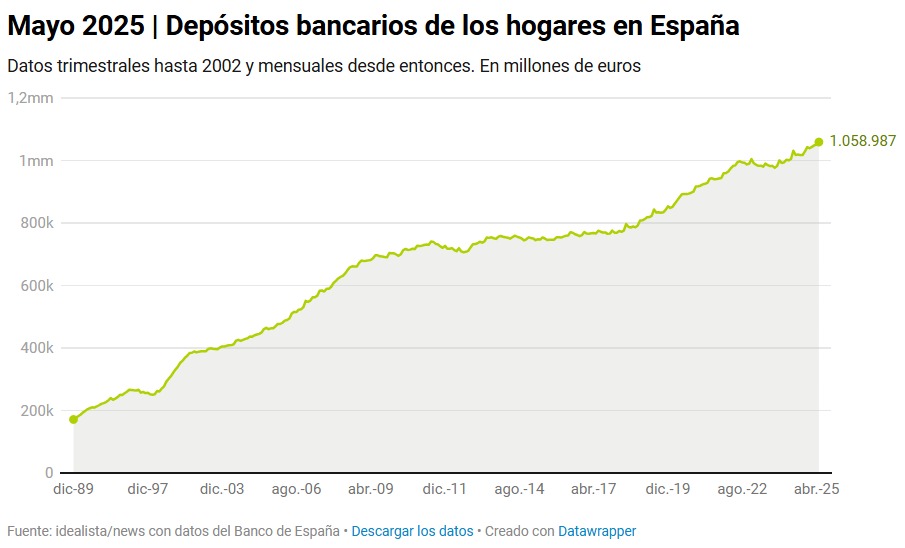
El Ministerio de Economía trabaja en la creación de una nueva cuenta de ahorro e inversión. La idea, en términos generales, es sencilla: una estructura flexible, ofrecida a través de bancos y plataformas financieras, que permitiría al ciudadano agrupar fondos de inversión, acciones y renta fija en un único vehículo con operativa simplificada e incentivos fiscales diseñados para favorecer el ahorro a largo plazo. El producto llevaría además la etiqueta europea Finance Europe, un sello común acordado en junio de 2025 por siete países, entre ellos España, Francia y Alemania, para identificar aquellos productos financieros que canalizan capital hacia la economía productiva europea. La cifra que justifica la iniciativa es conocida pero no deja de impresionar: los hogares españoles mantienen más de 1,1 billones de euros en depósitos y cuentas corrientes con rentabilidades exiguas, en muchos casos por debajo de la inflación.
Objetivos de financiación y rentabilidad
El objetivo declarado es doble. Por un lado, mejorar la rentabilidad del ahorro doméstico en un entorno de tipos más normalizados. Por otro, reforzar la financiación de empresas europeas canalizando capital minorista hacia los mercados, contribuyendo así a la autonomía estratégica del continente en un momento en que la competitividad de la Unión Europea frente a Estados Unidos y China está en entredicho. La medida se enmarca en el proyecto más amplio de construir una Unión de Ahorro e Inversiones en el seno de los Veintisiete, una de las patas pendientes del mercado único que los informes de Enrico Letta y Mario Draghi han señalado repetidamente como prioritaria. La Comisión Europea estima que aumentar la participación de los hogares en los mercados de capitales podría generar 750.000 millones de euros adicionales de ahorro productivo en una década.
El diseño tiene referencias claras. El Reino Unido lleva décadas operando con las ISA, cuentas con ventajas fiscales que han contribuido significativamente a normalizar la inversión minorista. Francia cuenta con el PEA, orientado a la renta variable europea. Suecia ha desarrollado la cuenta ISK, uno de los instrumentos más utilizados por sus ahorradores para invertir de manera sencilla y fiscalmente eficiente. En todos los casos la lógica es similar: reducir fricciones, simplificar la fiscalidad y hacer que el paso del ahorro a la inversión sea lo más natural posible.
El problema estructural más allá del diseño
Sobre el papel, la propuesta española apunta en esa misma dirección. Pero el análisis relevante no está en el diseño del producto. Está en el suelo sobre el que pretende crecer.
Porque el problema estructural en España no es la ausencia de vehículos de inversión adecuados. Es que la mayor parte de la población nunca ha desarrollado una relación normalizada con los mercados financieros. La tasa de ahorro española ronda el 13% de la renta disponible, por encima de la media histórica. Sin embargo, ese ahorro no se invierte: se guarda. El grueso del patrimonio familiar se concentra en el ladrillo, mientras que la exposición a activos financieros sigue siendo llamativamente baja en comparación con otros países europeos. El depósito bancario sigue siendo la opción dominante para la mayoría de los hogares, no por desconocimiento de los productos alternativos, sino por algo más profundo: una aversión al riesgo arraigada, una tradición histórica de preferencia por el activo inmobiliario y una educación financiera que durante generaciones ha brillado por su ausencia.
Cultura financiera no se crea con incentivos
Ese patrón no se corrige con un nuevo vehículo financiero. La experiencia internacional lo confirma. Las cuentas como la ISA británica o la ISK sueca no crearon de la nada una cultura inversora, sino que funcionaron como herramientas dentro de entornos donde esa cultura ya existía. Su éxito no reside únicamente en su diseño técnico, sino en que se insertan en sociedades donde invertir forma parte del comportamiento habitual del ahorrador medio, donde el mercado de valores no es percibido como un casino sino como una parte normal de la planificación financiera personal. Ese contexto no se importa con un decreto, y el propio Ministerio de Economía lo reconoce implícitamente cuando señala, en su consulta pública, que la mejora de la educación financiera y de la experiencia de usuario son condiciones necesarias para que la iniciativa funcione.
Un instrumento puede facilitar la inversión, pero no puede sustituir las condiciones culturales e institucionales que hacen que esa inversión sea recurrente. La tentación del enfoque regulatorio es siempre la misma: creer que el diseño correcto del producto puede corregir desequilibrios que tienen raíces mucho más profundas. Los incentivos fiscales reducen el coste de dar el primer paso, pero no resuelven el problema de quien nunca contempló esa posibilidad.
Utilidad limitada sin cambio cultural
La cuenta de ahorro e inversión es, en ese sentido, un paso coherente y probablemente útil dentro del proceso de integración europea de los mercados de capitales. Puede facilitar el acceso, reducir fricciones y ofrecer un marco más ordenado a quienes ya tenían intención de invertir. Pero su impacto real dependerá de algo que ninguna regulación controla directamente: la evolución de la cultura financiera del país.
El Gobierno puede diseñar la cuenta perfecta. El problema es que el cliente al que va dirigida lleva toda la vida guardando el dinero en el ladrillo o en el depósito, y no precisamente por falta de opciones.
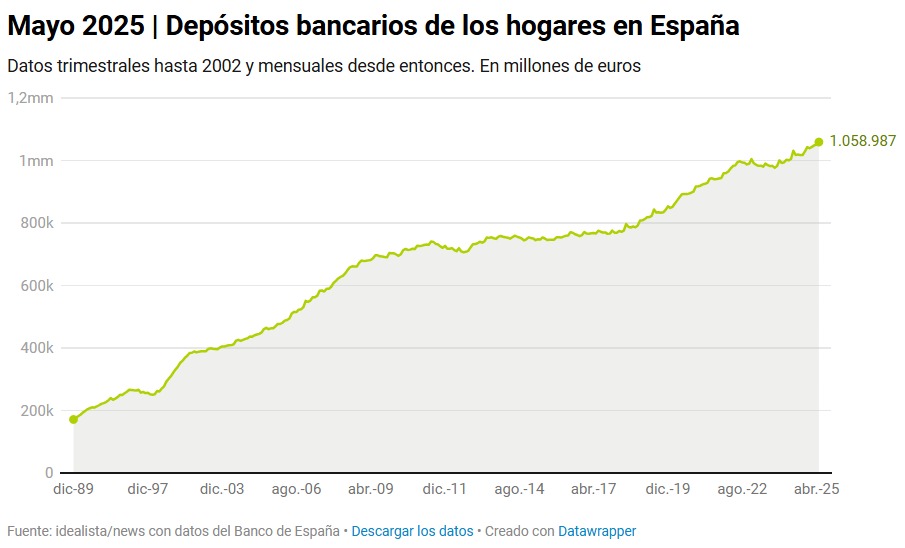
The Ministry of Economy is working on the creation of a new savings and investment account. In broad terms, the idea is simple: a flexible structure offered through banks and financial platforms that would allow individuals to bundle investment funds, equities and fixed income into a single vehicle with simplified operations and tax incentives designed to encourage long-term saving. The product would also carry the European label “Finance Europe”, a common seal agreed in June 2025 by seven countries, including Spain, France and Germany, to identify financial products that channel capital towards the productive European economy. The figure that underpins the initiative is well known but still striking: Spanish households hold more than €1.1 trillion in bank deposits and current accounts, offering negligible returns and in many cases yielding less than inflation.
Objectives for financing and returns
The stated objective is twofold. On the one hand, to improve the returns on household savings in a more normalised interest rate environment. On the other, to strengthen the financing of European companies by channelling retail capital into capital markets, thereby contributing to the strategic autonomy of the continent at a time when the European Union’s competitiveness relative to the United States and China is being questioned. The measure forms part of the broader project to build a Savings and Investments Union within the European Union, one of the unfinished pillars of the single market repeatedly identified as a priority in the reports by Enrico Letta and Mario Draghi. The European Commission estimates that increasing household participation in capital markets could generate an additional €750 billion in productive savings over a decade.
The design draws on clear precedents. The United Kingdom has operated Individual Savings Accounts (ISAs) for decades, tax-advantaged accounts that have played a significant role in normalising retail investment. France has the PEA, focused on European equities. Sweden has developed the ISK account, one of the most widely used tools among savers for investing in a simple and tax-efficient way. In all cases, the logic is similar: reduce frictions, simplify taxation, and make the transition from saving to investing as natural as possible.
The structural problem beyond design
On paper, the Spanish proposal follows the same direction. But the relevant analysis is not in the design of the product. It is in the ground on which it is meant to grow.
Because the structural issue in Spain is not the absence of suitable investment vehicles. It is that most of the population has never developed a normalised relationship with financial markets. The Spanish savings rate stands at around 13% of disposable income, above its historical average. However, that savings is not invested: it is held. The bulk of household wealth is concentrated in real estate, while exposure to financial assets remains strikingly low compared with other European countries. Bank deposits remain the dominant option for most households, not due to a lack of knowledge of alternatives, but because of a deeper factor: an entrenched aversion to risk, a historical preference for property, and a financial education system that has been largely absent for generations.
Financial culture cannot be created with incentives
This pattern is not corrected by the introduction of a new financial vehicle. International experience confirms this. Accounts such as the UK ISA or the Swedish ISK did not create an investment culture from scratch, but rather operated within environments where such a culture already existed. Their success lies not only in their technical design, but in the fact that they are embedded in societies where investing is part of the normal behaviour of the average saver, where the stock market is not perceived as a casino but as a standard component of personal financial planning. That context cannot be imported by decree, and the Ministry of Economy itself implicitly acknowledges this when it notes in its public consultation that improving financial literacy and user experience are necessary conditions for the initiative to succeed.
An instrument can facilitate investing, but it cannot replace the cultural and institutional conditions that make such investing recurring. The temptation of the regulatory approach is always the same: to believe that the correct product design can fix imbalances whose roots run much deeper. Tax incentives reduce the cost of taking the first step, but they do not solve the problem of those who never considered that step in the first place.
Limited usefulness without cultural change
In that sense, the savings and investment account is a coherent and likely useful step within the broader process of integrating European capital markets. It may facilitate access, reduce frictions and provide a more structured framework for those already inclined to invest. But its real impact will depend on something that no regulation can directly control: the evolution of the country’s financial culture.
The government can design the perfect account. The challenge is that its intended user has spent a lifetime keeping money in property or deposits, and not for lack of alternatives.
Compártelo en tu historia
- Descarga la imagen.
- Súbela a tu historia de Instagram.
- Añade el sticker de enlace y pega el del artículo: ya lo tienes copiado.